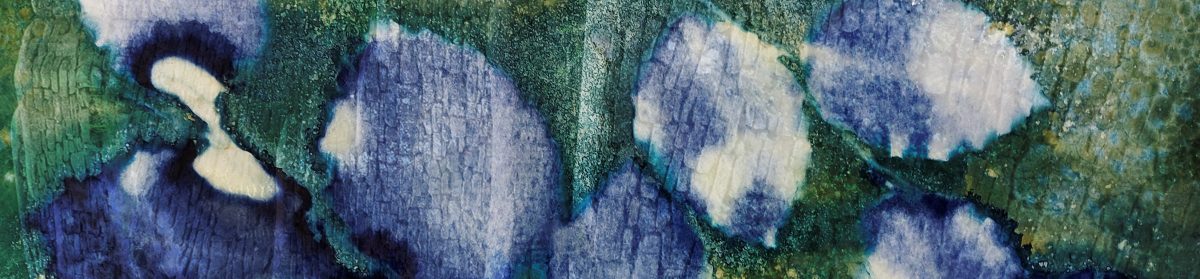

I was inspired by an artist on our local ‘Open Studio’ circuit last year who creates wonderful work using acrylic paint and alcohol ink and as there are plenty of tutorials on YouTube, thought I’d have a go.
You just need a couple of inks to start with, some smooth non-porous paper, some 95% isopropyl alcohol, a straw or hair dryer and off you go. Drop some alcohol onto the paper add some ink on top and push it around with the straw or hairdryer. I used the little puffer I have for cleaning dust off my lenses.
One of the reasons I wanted to try this process out though was because I had also seen someone on Instagram, I can’t remember who now, put cyanotype on top of alcohol ink with some interesting effects. It sounds simple enough, but the type of paper needed for cyanotype is absorbent and for alcohol ink, non-absorbent so how to get round that? I couldn’t find anything on YouTube about making cyanotype on yupo paper or layered with alcohol ink but there are several tutorials showing how to make cyanotypes on glass using gelatine mixed with the cyanotype chemicals. I had also done some experiments with gum bichromate where I needed to size the watercolour paper before use with PVA size so that the gum adhered to the paper so that was another options. In the event I tried both so save time, covering one half of the paper with a cyanotype/pva size mix and the other with cyanotype/gelatine mix, let it dry and went through the normal process for exposing cyanotype.
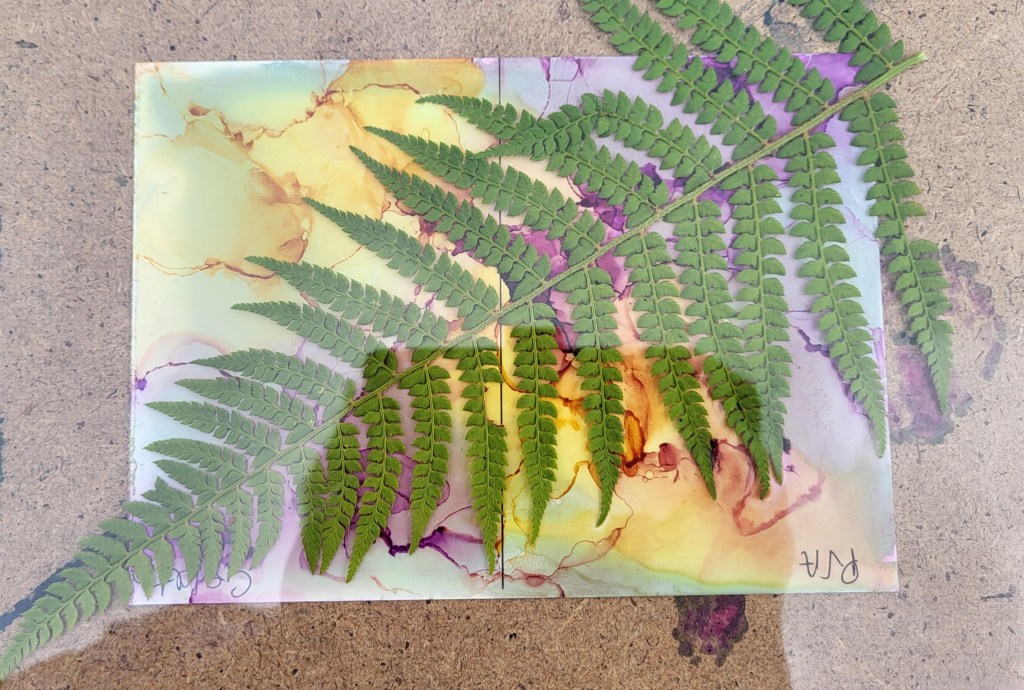
The PVA/cyanotype mix didn’t work at all as the mix just ran straight off the paper. I had more, albeit limited, success with the gelatine mix in so far as I got an image but still lots of lessons to be learnt.

Although I had followed the guidance on one of the tutorials about the proportions of cyanotype to gelatine, the gelatine was not diluted enough and the mix was too thick. As can be seen from the image above, I used this as a test print for exposure and did get an image but the ink design dominates and drowns out the fern, so the main learning point from this is that I need to which is the more important, cyanotype or ink and it is definitely cyanotype.
My second attempt faired better, though there are lessons to be learnt there too.
One of the methods of sizing watercolour paper for gum bichromate is to use a well diluted gelatine mix and I had some already prepared for the next gum bichromate session. This was enough for me to add a little ink where I wanted it to be, let it dry and coat with cyanotype chemicals. This time I used a dried head of cow parsley and exposed under a UV lamp, no test strip this time. What I had hoped was that the ink would appear in the white areas blocking the lamp and the rest would take on the normal cobalt blue of the cyanotype but it didn’t.
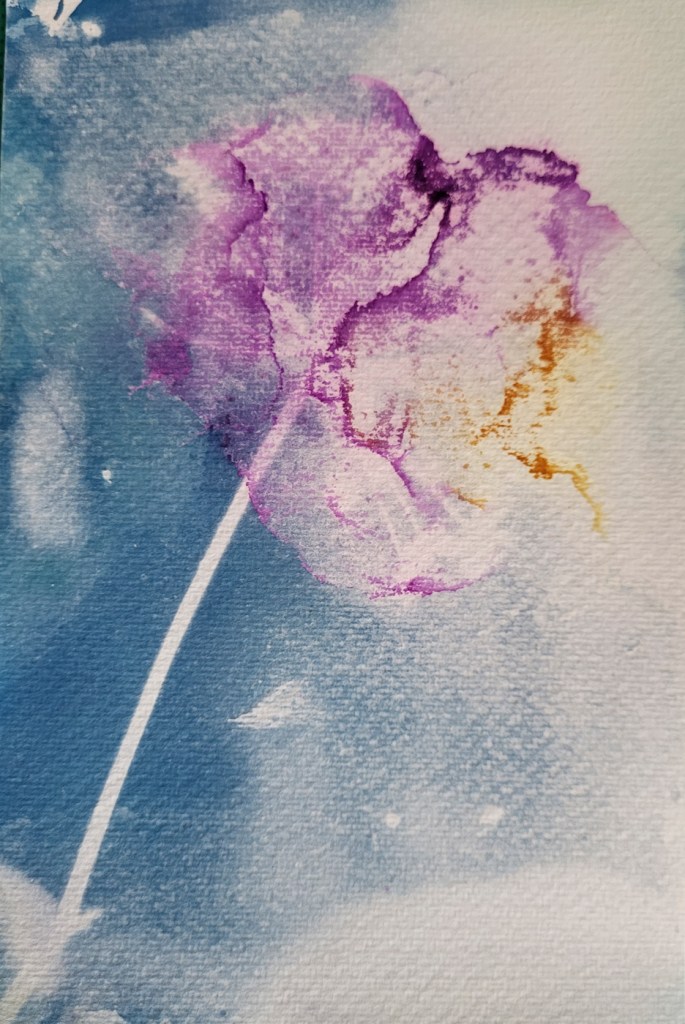
The size has prevented the paper absorbing the cyanotype chemicals, the print is under-exposed so I’m not getting the outline of the seedhead coming through, have I over washed the print? Maybe.
I do quite like the painterly effect though so all is not lost so where to next? The ink has got to be the accent rather than dominate, so maybe I just size a small area where I will apply the ink. I will try again with gelatine but in a more diluted form and I will definitely use watercolour paper which is much cheaper than Yupo.
 Anne Bryson Photography