Artquest 30/30 Day 22 ‘Give in to your responsibilities’

So I could have just abandoned this challenge and gone and done the ironing but I’m over 2/3rds of the way there so not stopping now! When I searched the definition for this hint, I came up with things like ‘commit to something you have undertaken to do’ and it got me thinking about a project I tentatively started a few years ago, based around the iron industry in the Forest of Dean. I had been inspired by a photographer called Toril Brancher who was appointed Artist in Residence at LLwyn Celyn when the property was being restored in 2018. Rather than documenting the restoration, she wanted to find a link between the many generations of people who had lived in the property over several hundred years and focused on the plant life around the property for her project which she called ‘Could the grass remember?’ Whilst there is lots of information, including photographs of the coal industry in the Forest of Dean, there is very little about iron, even though it had been a main source of industry for many more years, since Roman times up until the early 19th Century. What hasn’t changed though is the plant life and this is where my work had started. My thinking was that I would use cyanotype to record the plant material and where possible, photograph where mines had been and somehow bring the 2 together. Early experiments seemed to work ok but by this time, I was coming to the end of year 2 of my photography studies, covid landed and that’s when I came to a halt.
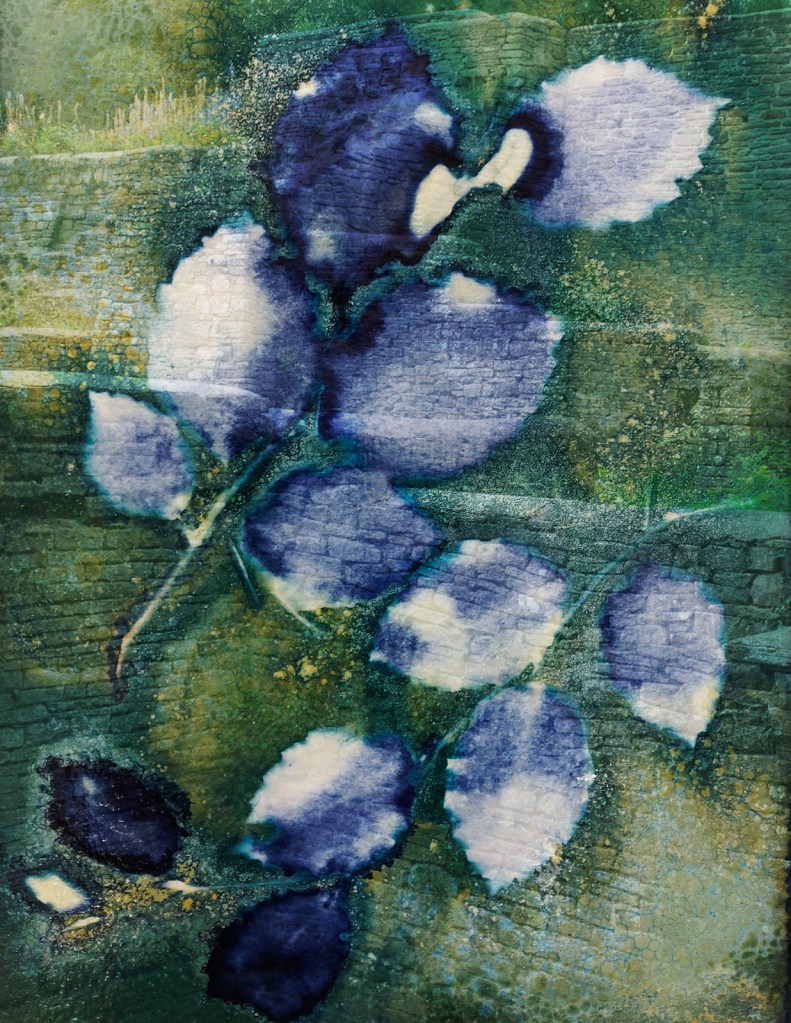
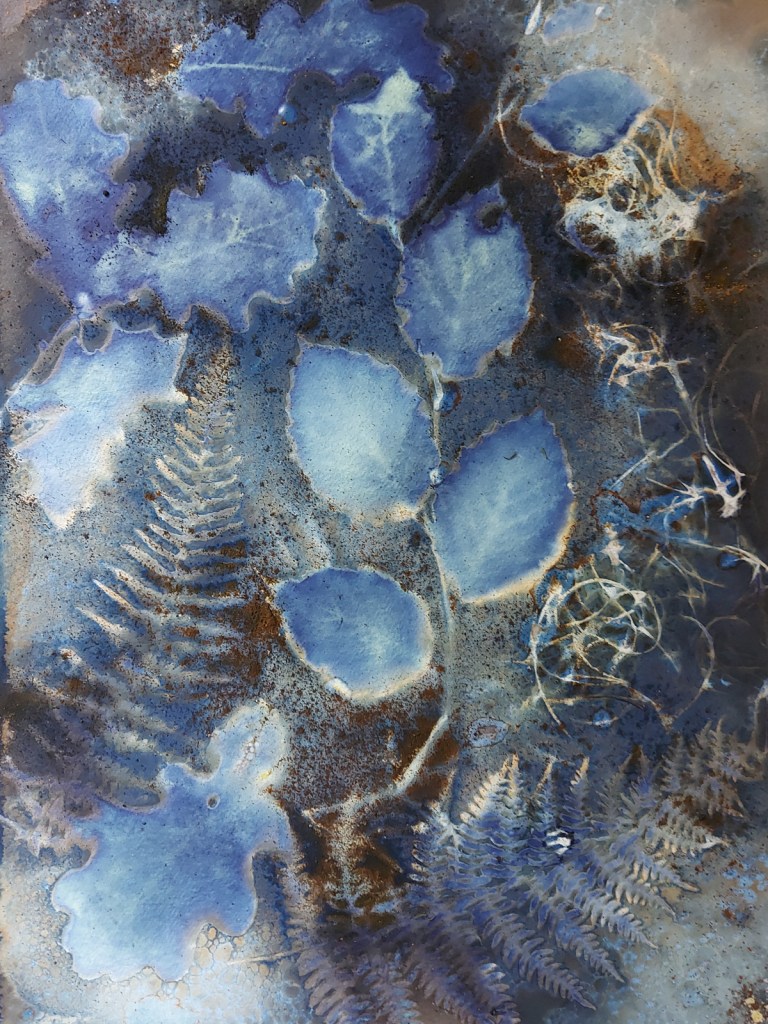
My task for today’s work was to make another composite using some of the images I had made back then and maybe, just maybe, I will pick this up again and see where it goes. So today’s image is a wet cyanotype made from ferns collected at the Scowels near Bream, at a place known as the Devil’s Chapel and combine it with a photograph taken at the same place at the same time and modified in Photoshop.
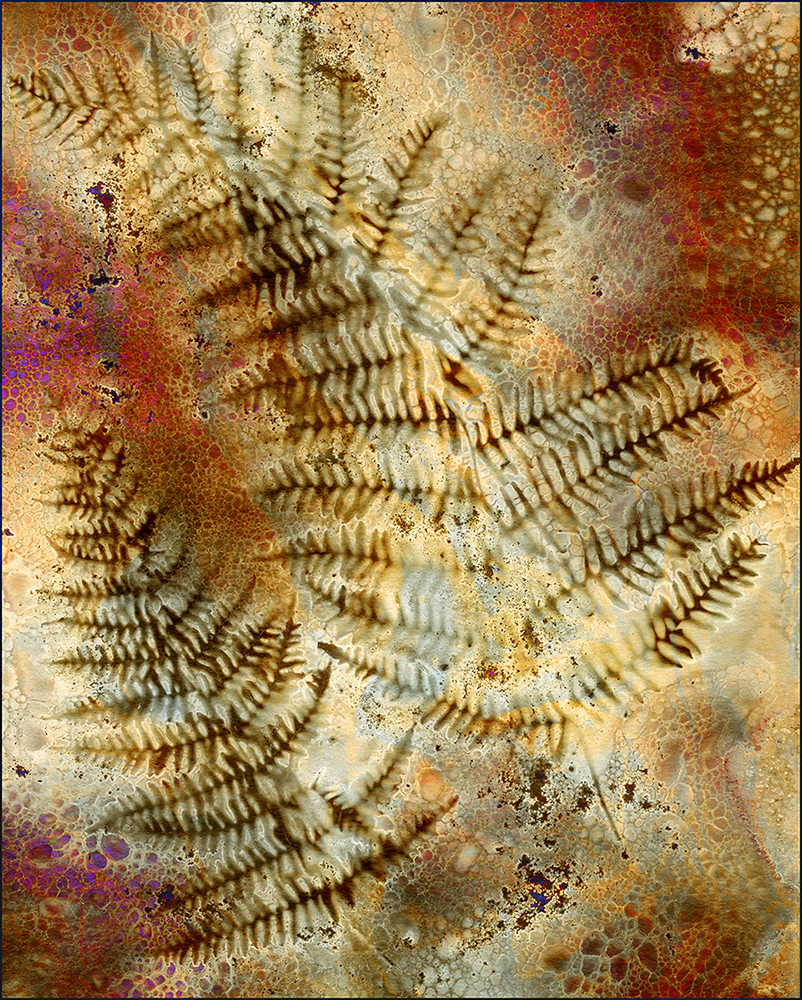
I like the image, particularly the rust or iron effect produced with some of the filters in Photoshop but the photograph taken on the day doesn’t come through clearly enough, so whilst this meets the brief, it is back to the drawing board to see it this project still has any potential.

Now for something a little different

I mentioned in a post a few weeks ago that I was very pleased to have had 2 images selected for the RPS Annual Members Exhibition, which is currently on in Bristol. Myself and 2 guests were invited to the private view a week ago and although a little nervous, I traipsed along with my daughter and one of my granddaughters. Nervous because although I exhibited work along with peers on a degree course we all took part in a few years ago but I have never exhibited work on a national stage before and I wasn’t sure how my images would stand up against all the other, much more accomplished photographers there.

Well I needn’t have worried, my 2 cyanotypes certainly held their own. There was only one other cyanotype on display and I would say that mine was far superior, not that I am biased at all! I really liked the way they were curated. printed at A3 with white borders in simple black frames and alongside other works of complementary colours.

I am glad of one thing and that is that I had submitted my work for this exhibition before the camera club competition mentioned in my previous post. If it had been the other way around and I had listened to the ramblings of the camera club judge, I would never have submitted them.

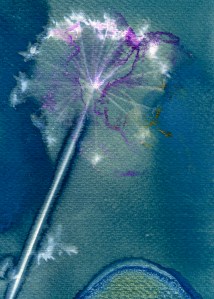
Hydrangea Seedhead and Allium seedhead wet cyanotypes with added vinegar, turmeric and soap bubbles on display at the RPS Summer Exhibition in Bristol from 1st July to 28th August 2023.

Further experiments with cyanotype and alcohol ink

Following on from my last post, I decided to take my experiments with cyanotype and alcohol ink a little further because in neither case I had got exactly what I was looking for.

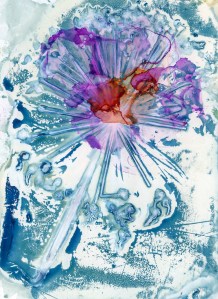
In the second print in my last post, which was on watercolour paper, whilst I quite liked the painterly effect, the whole thing was under exposed, either that or the PVA size, which I had added to allow me to manipulate the ink, had stopped the cyanotype chemicals from being absorbed into the paper. Either way, I needed to work out what was happening. So, I coated the paper and exposed it again, carefully placing the same seedhead onto the wet paper.

I didn’t add any of the additional extras that I would normally add to wet cyanotypes, such as vinegar, turmeric or soap suds, one thing at a time!

The resulting print is certainly more like a cyanotype than the previous attempt. I do need to think more carefully about what effect I want from the ink, so more practice needed there. I also need to take my time and do some test prints to get the exposure right. This one, being wet , was exposed for several hours, then left overnight before I removed the plant material and washed the print. In the end, it was washed for quite a long time to get as much chemical out as possible as the print was quite dark.

I mentioned in my last post that Yupo paper is quite expensive. Too expensive to experiment with really, but there doesn’t seem to be a right or wrong side and as the chemicals don’t soak into the paper, I decided to try my second experiment with this, on the reverse of the first print.

First time round, I felt that the consistency of the gelatine was too thick, so after a few more YouTube searches, I diluted it further. I’m still not sure I have the ratio of gelatine to cyanotype chemicals correct, if anything, I may have diluted the gelatine too far this time, as the solution did not adhere to the paper was well as I’d hoped. Again, this was exposed whilst the paper was still wet and again, whilst not what I had expected, it does have potential and I do quite like the painterly effect.

My final print from this session was a wet cyanolumen on expired Kentmere Bromide Stipple darkroom paper. Again I added a little of the gelatine mix to the coating solution as last time I used this paper, I found that the cyanotype chemicals did not adhere to the paper very well. The only problem I had this time was that the plant material stuck to the paper so I had to soak it the whole thing in order to remove it. The plant material here is bluebells and ferns pressed last year and then forgotten about. This print was fixed in Ilford Rapid Fixer. Do I need to do that with a cyanolumen? I know I need to fix lumen prints but not sure if I need to fix cyanolumens too, need to check that one out!