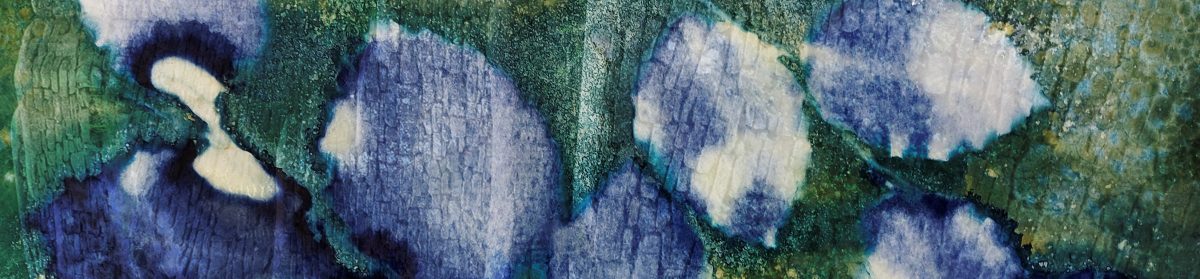
A couple of months ago I visited an exhibition for the first time in many months. ‘Squaring the Circles of Confusion: Neo-Pictorialism in the 21st Century’ at RPS House in Bristol, caught my attention initially because the advertisement I saw featured cyanotype prints, something I have been dabbling in for a little while. The work that really pulled me in was not Joy Gregory’s cyanotypes though but a gum bichromate work by Ian Phillips-McLaren entitled ‘Gwen, Did I want to be here’. I haven’t asked permission to show Ian’s work but it is available on his website, here
The back story to this work was really moving. Gwen, McLaren’s mother in law suffered from dementia. He had done a huge amount of research into the disease, and this work, a five foot high, multi layered gum bichromate print was a tribute to her. I was so taken it I decided to explore the process further.
There is a section on gum bichromate in ‘Experimental Photography: A Handbook of Techniques’ (Thames and Hudson, 2015), numerous YouTube videos of varying levels of usefulness and I discovered a ‘Domestika’ course, which was my real starting point.
To start with I have made do with materials I had; watercolour paper and tubes of pigment, Gum Arabic is readily available and I managed to source potassium dichromate which is very toxic and needs careful handling. The results weren’t wonderful but enough to get me hooked.
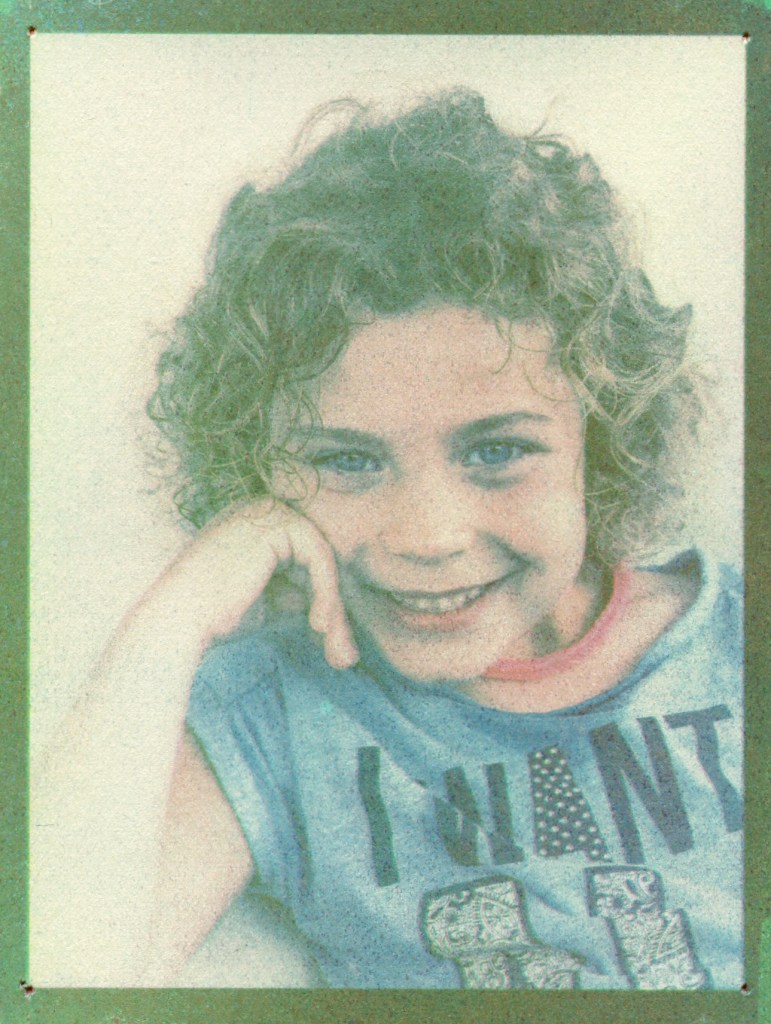
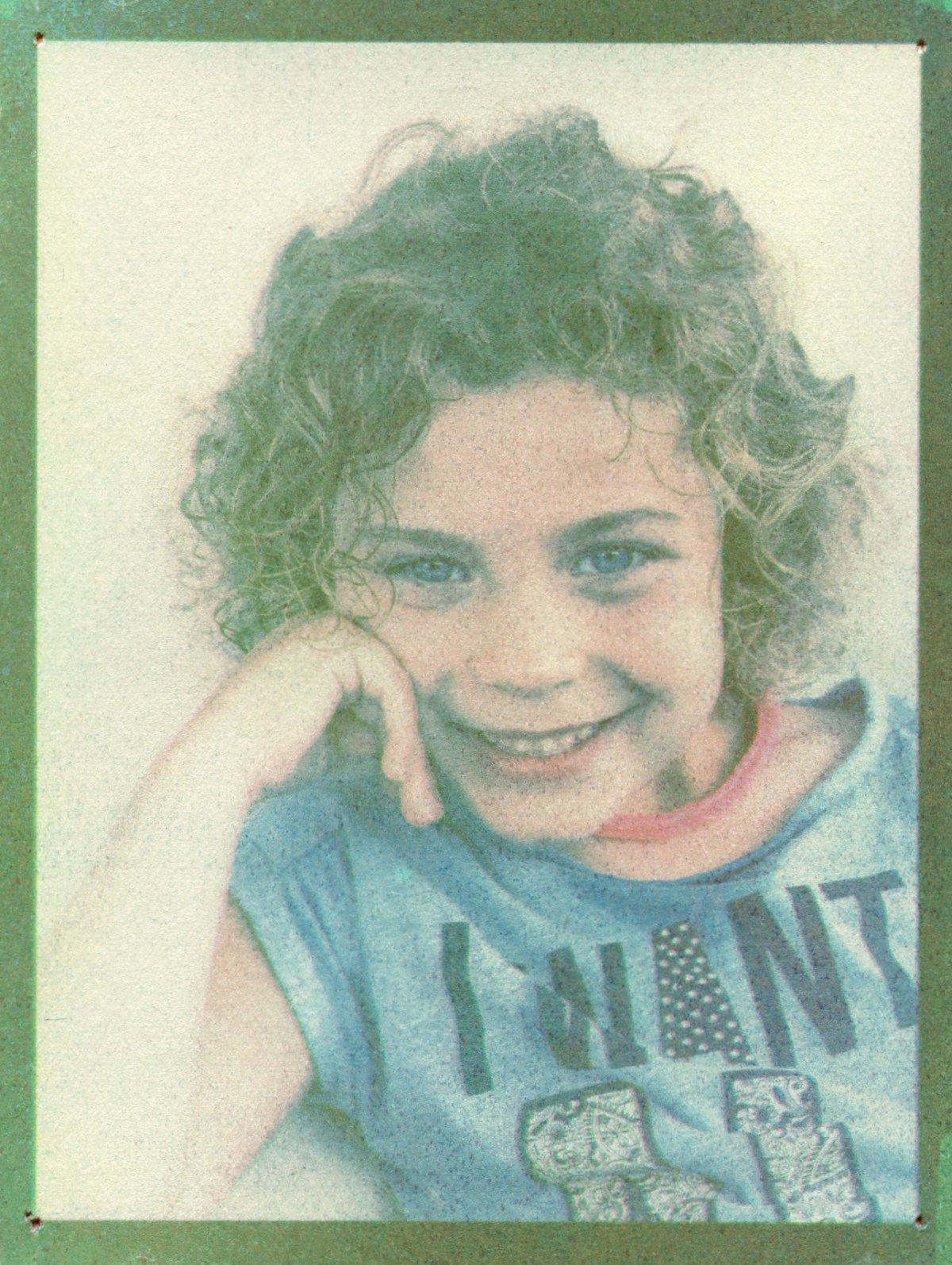
This is a very long and time consuming process. I used the method identified in the Domestika course which involved splitting the colour channels of an image into RGB (magenta, yellow and cyan), printing a separate negative for each channel then coating, exposing and drying each in turn. It is crucial that all exposures are registered absolutely accurately and you can see the pin marks where I have attempted to do that.
I found a ‘gum bichromate’ group on Facebook where the members are very generous with their feedback and guidance and through this group I was introduced to an absolute bible for gum printing. Anderson, Christina Z. Gum Printing. Routledge, 2017. it covers everything you could possible need to get started, from the history, to Anderson’s favourite pigments, to photoshop curves for printing the digital negatives, to a section on artists who use gum bichromate and other less toxic alternatives. As a result of this find I bought some new pigments and in my next experiment, used CMYK as opposed to RGB channels. The added K, (black) pigment makes a huge difference to the tones so I think this is probably the method I will use in future. The other thing I have learned from the FB group is that it is usually not enough to print each negative/pigment once. There are 9 layers in the attached images and it’s still by no means perfect!
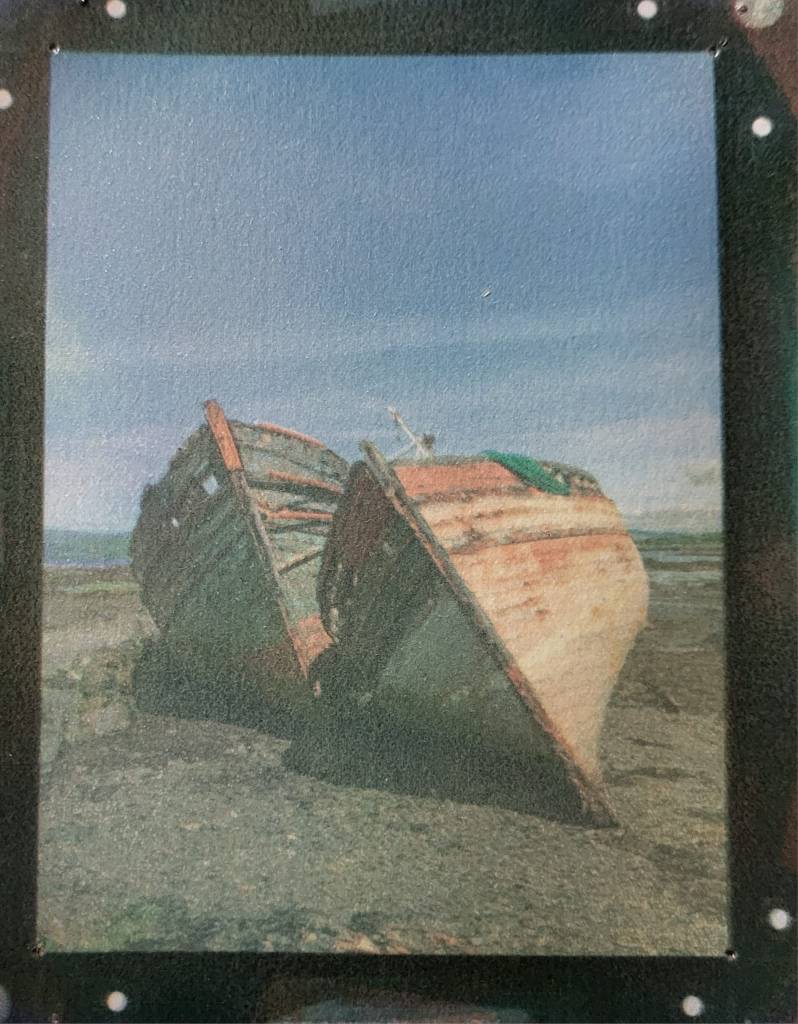
According to Ian Phillips McLaren’s website it took him seven months to make ‘Gwen’ with only 1 two week break during the process, so I have a long way to go yet!
 Anne Bryson Photography